uPVC Door Won’t Lock? 5 Things to Check Before Calling a Locksmith
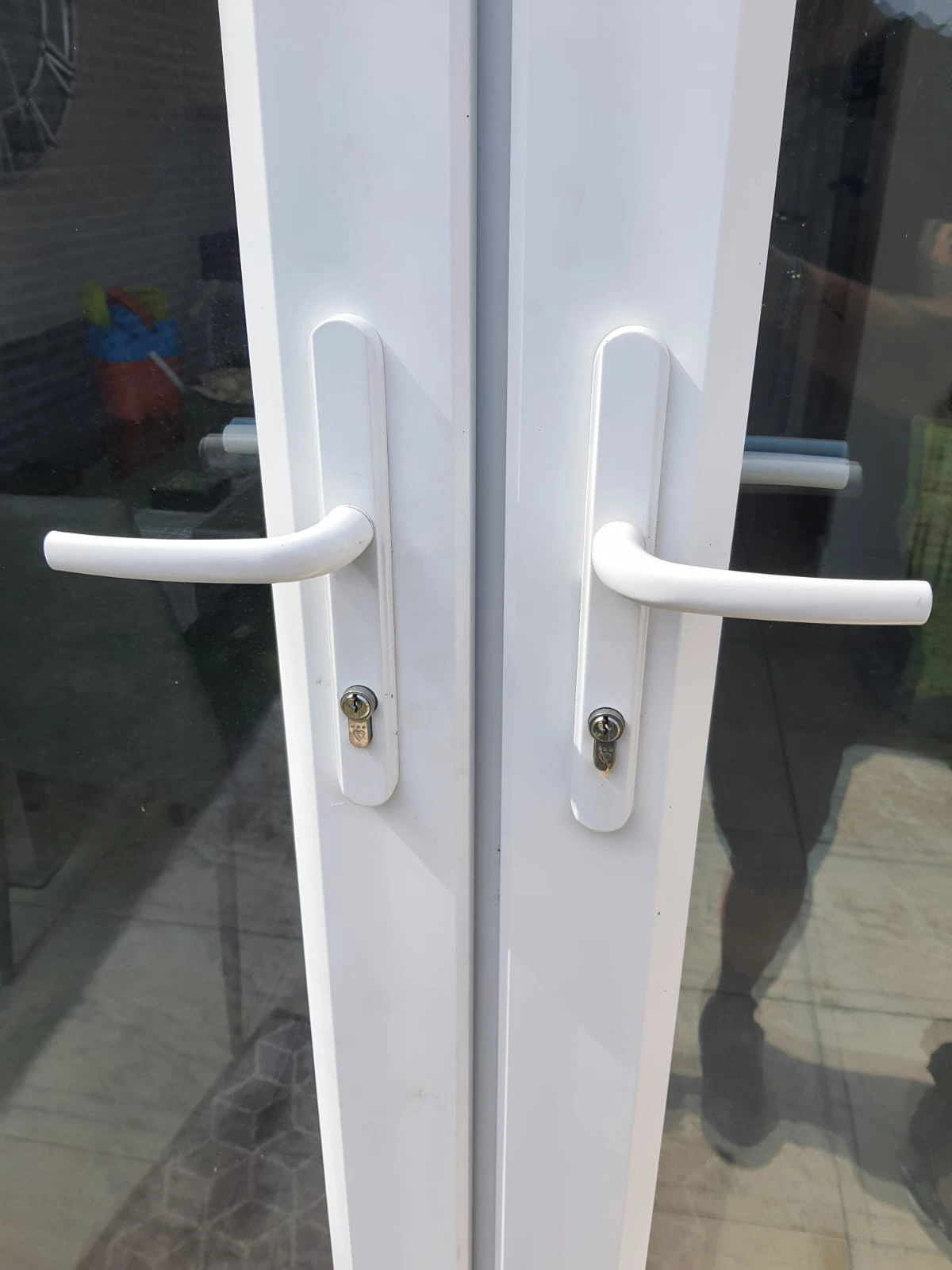
If your uPVC door has suddenly stopped locking properly, the good news is that it’s rarely as serious as it feels in the moment. Most uPVC and composite doors use a multipoint locking system, a single handle that drives several hooks, rollers or bolts along the edge of the door at once. That’s great for security, but it also means there are more moving parts that can drift out of sync over time.
Before you call anyone out, there are five quick checks that will usually tell you exactly what’s wrong, and whether it’s something you can sort yourself or something that needs a professional. Here’s how to work through them safely.
1. Run the “open door” test first
This is the fastest way to tell the difference between an alignment problem and a mechanical one, and it costs nothing.
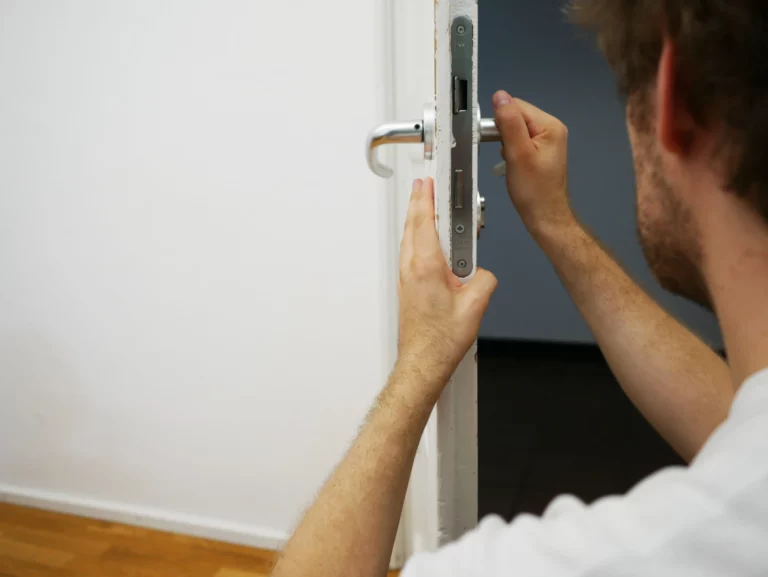
Open the door fully so there’s no weight on the hinges, then lift the handle in mid-air.
- If the handle lifts smoothly and the hooks throw out cleanly, the lock mechanism itself is fine. The problem is almost certainly that the door has dropped slightly and the bolts no longer line up with the keeps in the frame when it’s closed.
- If the handle feels stiff, grinds, or lifts without the bolts moving properly even with the door wide open, you’re likely looking at a worn or failing gearbox rather than an alignment issue.
This one test narrows the problem down before you touch a screwdriver, which matters, because the wrong fix (forcing a misaligned door, or ignoring a failing gearbox) tends to turn a small job into a bigger one.
2. Check whether the door has dropped on its hinges
Misalignment is the single most common reason a uPVC door won’t lock, and it’s usually caused by the door settling slightly over months or years of daily use, or by hinges that have loosened.
Signs to look for:
- The door only locks if you lift the handle firmly or lean your shoulder into the door while turning the key
- The door has a visible gap along one edge, or drags on the frame or the floor
- It locked fine a few months ago and has gradually got stiffer
Many uPVC hinges have small adjustment screws (usually accessed with an Allen key) that let you nudge the door up, down, or sideways by a few millimetres. If you’re comfortable doing so, a small adjustment is often enough to bring the bolts back in line with the keeps. If you’ve already tried adjusting the hinges once or twice and the door still won’t settle, stop there. Repeated forcing can damage the keeps or the gearbox, which turns a simple adjustment into a full mechanism replacement.
3. Check for a worn or failing gearbox
The gearbox sits behind the handle and is the part that actually converts the handle’s movement into the bolts locking and unlocking. It’s made up of small springs, cams and levers, and after several years of daily use, it’s the part that wears out first.
Typical signs of gearbox failure:
- The handle feels loose, drops back down on its own instead of springing back up, or turns without anything happening
- The key turns freely in the cylinder but the bolts don’t move
- The door locked fine with the door open (see check 1) but never fully engages when closed, even after adjusting the hinges
A gearbox generally can’t be repaired, only replaced, and it needs to match the backset and hook positions of your existing door. This is one of the checks where, if you confirm it’s the gearbox, it’s genuinely worth booking a locksmith rather than ordering a generic part online. Fitting the wrong gearbox is a common (and avoidable) cause of a door being left insecure.
4. Check whether it’s the key and cylinder, not the door
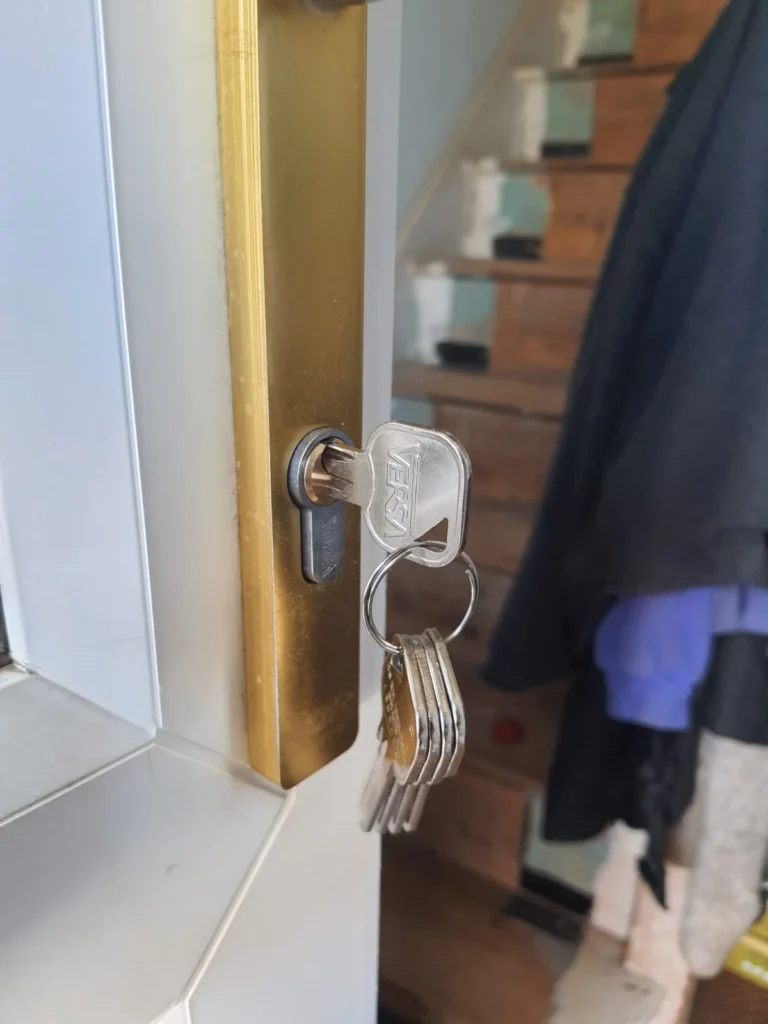
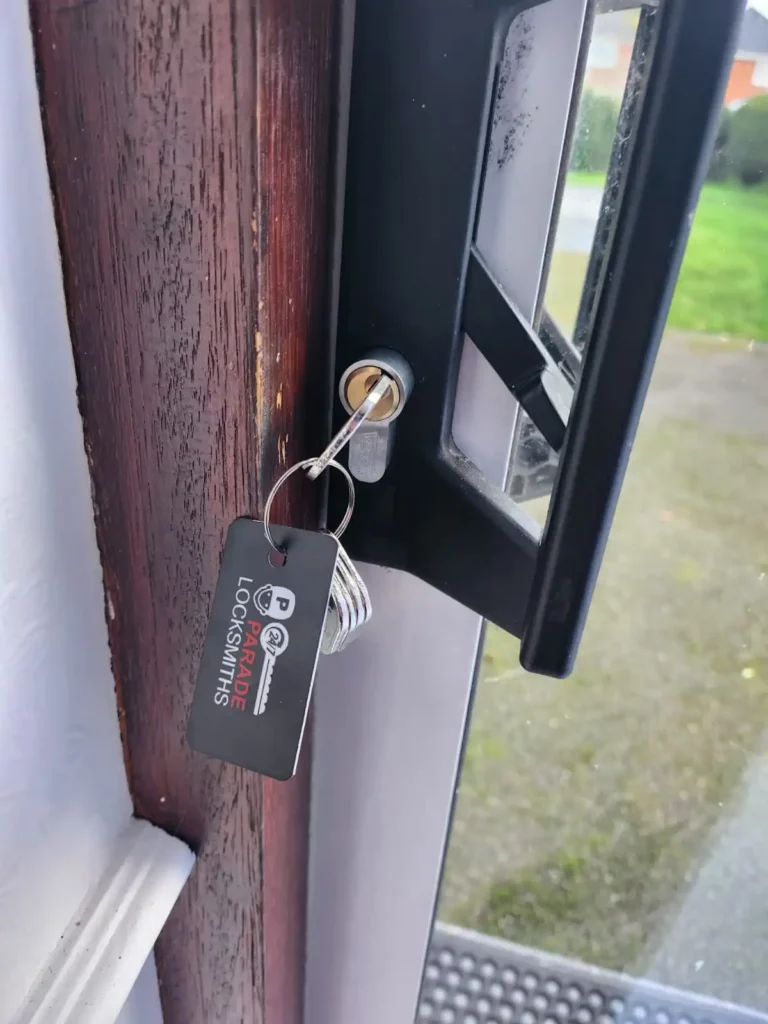
If the handle lifts and the bolts throw properly, but the key itself won’t turn, is stiff, or spins without doing anything, the fault is in the euro cylinder rather than the multipoint mechanism.
Common causes:
- A worn or damaged key that no longer grips the pins properly
- Dirt or old, gummed-up lubricant inside the cylinder
- A cylinder cam that has sheared, which is why the key can spin freely with no resistance
Try a spare key first, since a worn key is a cheaper and far more common problem than a worn cylinder. If a spare key does the same thing, the cylinder itself likely needs replacing. Never force a key that won’t turn. A snapped key inside the cylinder turns a straightforward job into a more awkward extraction, and usually means calling a locksmith regardless.
5. Check when the lock was last lubricated, and use the right product
uPVC locks need occasional maintenance just like any mechanical system, and a dry or dirty mechanism is one of the most common (and easiest to fix) causes of stiffness.
What to do:
- Use a dry PTFE spray or a light silicone-based lubricant on the visible moving parts, hooks, rollers and the latch
- Avoid oil-based sprays like WD-40 directly inside the cylinder. It can feel like it’s helped in the short term, but oil attracts dust and grit, which tends to make the lock stickier again within a few weeks
- Apply sparingly and work the handle and key a few times to let it work into the mechanism
If lubrication frees things up, it’s worth doing every six to twelve months as routine maintenance, particularly on doors that face the weather directly.
When to stop and call a locksmith
Most of the above checks are safe to try yourself. But there are a few points where it’s genuinely better to stop and call a professional rather than keep pushing:
- The handle is stiff or grinds even with the door wide open (gearbox fault)
- You’ve adjusted the hinges more than once and the door still won’t settle
- The key won’t turn and you’re tempted to force it
- The door only locks under pressure, meaning it isn’t actually secure even when it appears to be locked
Forcing a uPVC lock past any of these points is the single most common way a repairable fault turns into a full mechanism or door replacement. It’s also worth remembering that an insecure multipoint lock, one that only catches one or two of its points, can leave a door looking locked while actually offering very little real security.
If you’re in Clacton-on-Sea, Colchester, or anywhere else across our coverage area and you’ve run through these checks and you’re still stuck, get in touch with Parade Locks. We carry a range of gearboxes and cylinders on the van, so most uPVC lock faults can be diagnosed and fixed in a single visit, no call-out fee, and we’re on call 24/7 for anything that can’t wait.
Frequently Asked Questions
Why has my uPVC door suddenly stopped locking?
The most common cause is the door dropping slightly on its hinges over time, which throws the locking bolts out of alignment with the keeps in the frame. The second most common cause is a worn gearbox, particularly on doors that are several years old.
Can I fix a uPVC door lock myself?
Alignment issues and general stiffness can often be resolved with a hinge adjustment and the right lubricant. Gearbox failures and cylinder faults usually require the correct replacement part and are best left to a locksmith, since fitting the wrong part can leave the door insecure.
Is it safe to use WD-40 on a uPVC door lock?
It’s best avoided inside the cylinder. WD-40 is oil-based and tends to attract dirt over time, which can make the lock stickier again within weeks. A dry PTFE spray or light silicone lubricant is the safer long-term choice.
How much does it cost to fix a uPVC door lock?
This depends on the fault. A hinge adjustment or lubrication is usually the cheapest fix, a cylinder replacement is moderate, and a full gearbox replacement is the most involved repair. A locksmith can normally diagnose the exact cause and confirm a price before starting any work.
What if my key snaps in the lock?
Stop trying to turn it. Forcing a stiff key is the most common cause of a snapped key. If it does snap, don’t try to remove it yourself with pliers or tools, as this can push fragments further into the cylinder. Call a locksmith for extraction.