Key Snapped in the Lock? What to Do Next (and What Not to Do)
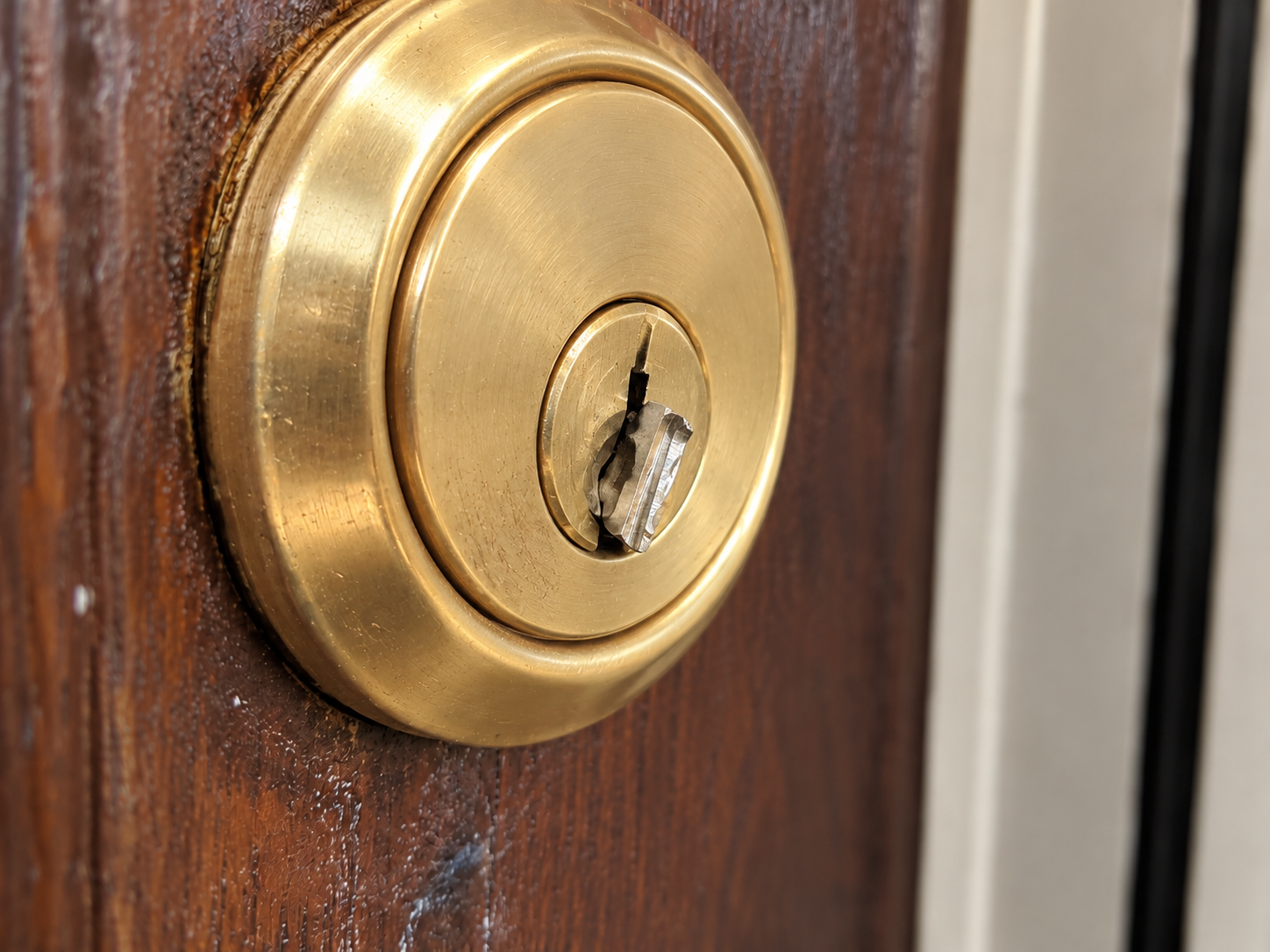
You turn the key, feel it resist, give it a bit more, and then it goes light in your hand. Half the key is in your fingers. The other half is in the door.
It is a horrible feeling, particularly if you are standing outside in the dark with shopping in the other hand. The good news is that this is one of the more fixable problems we deal with, and in most cases the lock itself survives.
The bad news is that the next five minutes matter. Most of the serious damage we see from snapped keys is not caused by the key breaking. It is caused by what people do in the ten minutes afterwards.
Here is what actually helps, what makes it worse, and why it happened in the first place.
Stop before you do anything else
Four things to avoid, right now, before you try anything:
1. Do not push your spare key into the same lock. This is the most common instinct and the most damaging one. The broken piece is still sitting in the keyway. Pushing a second key in drives it further back, usually past the point where it can be gripped, and often jams it against the pins. A job that would have taken ten minutes can turn into a cylinder replacement.
2. Do not turn the stub that is left in the lock. If part of the key is still protruding, leave it where it is. Rotating the cylinder changes how the internal components sit against the broken piece and can make it considerably harder to extract.
3. Do not use superglue. There is advice circulating online suggesting you glue the broken half of the key to the stub and pull it out. Please do not. Glue runs into the keyway, sets around the pins, and turns a straightforward extraction into a guaranteed lock replacement. We have seen it more than once.
4. Do not reach for the WD-40. We will come back to this, because the lubricant question is worth getting right. In short, the standard multi-use product is solvent based. It strips out the lubricant already in the lock and leaves it drier than it was.
Work out which situation you are in
Two questions determine what happens next.
Is the door locked or unlocked?
If the key snapped while unlocking, and the door is now open or openable, you have time. This is not an emergency. You can get inside, make a cup of tea, and sort it properly.
If the key snapped while locking up, and the door is now unsecured, that is a different matter. The door cannot be properly locked and the property is not secure. That usually does warrant a same-day callout, particularly if you are leaving the property or it is getting dark.
If the key snapped and you are locked out, you need help to get in, and a locksmith will normally combine entry and extraction in the same visit.
Is any part of the key sticking out?
Look closely at the keyway. If you can see a few millimetres of metal protruding beyond the face of the cylinder, there is a reasonable chance of a simple extraction. If the break is flush with the face, or the piece has gone back inside the keyway, that is a job for proper tools.
The one DIY attempt that is reasonable
If, and only if, the key is clearly protruding and the door is not urgently needed, there is one sensible thing to try.
- Leave the cylinder where it is. Do not rotate it to straighten anything up.
- Apply a small amount of a proper lock lubricant into the keyway. A dry PTFE spray or a light puff of graphite powder. Not oil, not WD-40, not cooking spray.
- Grip the protruding metal with fine needle-nose pliers or tweezers, keeping the jaws parallel to the sides of the keyway rather than at an angle.
- Pull straight out, slowly and steadily. No twisting, no wiggling, no levering against the face of the lock.
If it comes, good. If it moves a little and then stops, stop with it.
When to stop
Stop if any of the following apply:
- You cannot get a grip on it within a couple of attempts.
- It moves slightly and then binds.
- You feel yourself starting to apply real force.
- The piece disappears further into the keyway.
- The lock is on a uPVC or composite door with a multipoint mechanism, and the door is currently in the locked position.
At that point, further attempts stop being free. The difference between a snapped key removed cleanly and a snapped key dug out with the wrong tools is usually the difference between a small bill and a new cylinder.
The methods you will see online that we would avoid
Search this topic and you will find a lot of near-identical articles recommending the same list. Some of it is fine. Some of it is not.
Jigsaw or hacksaw blades. This one does genuinely work in skilled hands, and it is a recognised technique. The problem is that the teeth need to face the right way, the blade needs to go in along the correct side of the keyway, and if you get it wrong you shear the blade off inside the lock. Now there are two things stuck in there, one of which is hardened steel.
Paperclips and hairpins. Too soft to grip a key and too easy to leave behind. Mostly they just push the fragment deeper.
Magnets. House keys are usually brass or nickel silver. Neither is magnetic. This advice gets repeated constantly and it does not work on the vast majority of domestic keys.
Drilling it out. This destroys the lock by definition. It is sometimes the right answer, but it is the last resort, not the first, and it is not a DIY job on a door you want to keep using.
What a locksmith actually does
For context on what you are paying for, extraction is a specific skill with specific tools.
A locksmith will usually start by looking into the keyway, sometimes with a borescope, to see exactly how the fragment is sitting and whether the cylinder is rotated. They will then use broken key extractors, thin hooked or spiral tools designed to slide down the side of the keyway, catch the key’s teeth, and draw the piece out without disturbing the pins.
Where the cylinder has been rotated and the fragment is trapped, they may need to manipulate the cylinder back to the correct position first.
In the large majority of cases the key comes out and the lock is completely unharmed. Extraction is non-destructive work. If anyone’s first suggestion is to drill the lock, ask why, and consider getting a second opinion. That is covered in more detail in our guide on spotting a trustworthy locksmith.
Will the lock need replacing?
Usually not, but it depends entirely on why the key broke.
If the key simply wore out, extraction plus a new key cut from a good original is normally the whole job.
If the key broke because the lock or door was already failing, replacing the key alone just buys you a few weeks. The next key will snap too. This is the part most articles skip, and it is the thing that actually saves people money.
Why keys snap, properly explained
A key is a thin piece of brass or nickel silver. It does not spontaneously fail. Something made it harder to turn than it should have been, and the key was the weakest component in the chain.
Worn keys. The most common cause. Every turn removes a little metal from the teeth. A twenty-year-old original that has been in a pocket with loose change every day has rounded, thinned edges and a fatigued shoulder. Keys have a service life.
Copies of copies. Each duplication drifts slightly from the original. A copy of a copy of a copy can sit imperfectly in the lock, which means more force is needed to turn it. If you have no idea which of your keys is the original, that is worth sorting.
A stiff or dry cylinder. Dirt, grit and old lubricant residue build up inside the keyway over years. The lock gets gradually harder to turn, you gradually push harder, and one day it gives.
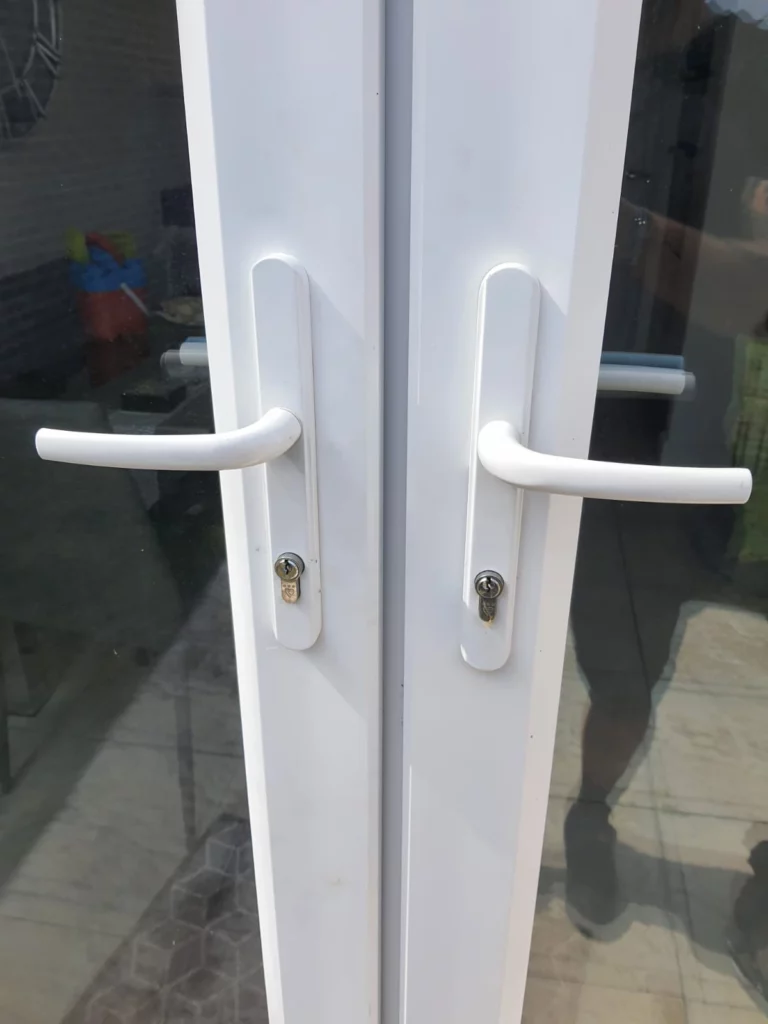
Door and frame misalignment. This is the big one on uPVC and composite doors. If the door has dropped on its hinges, or the frame has moved, the multipoint hooks and rollers no longer line up with the keeps in the frame. The lock is then being asked to pull the whole door into position, and all of that load goes through the key. We see this constantly in Colchester and Clacton, often on doors that are fifteen to twenty-five years old. The giveaway is needing to lift the handle hard, or lean on the door, to get it to lock.
Cold weather. Not because the metal becomes brittle, but because lubricant thickens and tolerances tighten in the cold, so the lock stiffens. People then apply more force to a key that is already worn. This is why we see a noticeable rise in snapped key callouts from late autumn onwards, which is worth bearing in mind now.
Coastal exposure. Worth conidering for anyone in Clacton, Holland-on-Sea, Frinton, Walton or St Osyth. Salt air accelerates corrosion inside external locks, especially on seafront-facing doors and side gates. Those locks genuinely need lubricating more often than an inland property.
How to stop it happening again
Four things, none of them expensive:
- Replace worn keys before they break. If the teeth look rounded compared with a new cut, or there is any visible bend or hairline mark near the shoulder, have a fresh one cut from the best original you have. A key costs a few pounds. A callout does not.
- Lubricate the lock once or twice a year. Use a dry PTFE lubricant, which goes on wet, dries to a slick film and does not hold dust. Graphite powder also works well, though it can clump in damp conditions, so for exposed coastal doors PTFE is the better choice. Apply sparingly into the keyway, then work the key in and out a few times to distribute it.
- Avoid WD-40 and general-purpose oils. The standard multi-use formula is solvent based. It strips out the lubricant already present and leaves the mechanism drier, which attracts grit and makes sticking worse over time. It can feel like it has fixed the problem for a week, which is exactly why people keep using it.
- Treat stiffness as a warning, not a quirk. If a key needs jiggling, if you have to lift the handle with real effort, or if the door only locks from one particular angle, the mechanism is telling you something. That is the cheap moment to fix it. The snapped key is the expensive moment.
A few specific situations
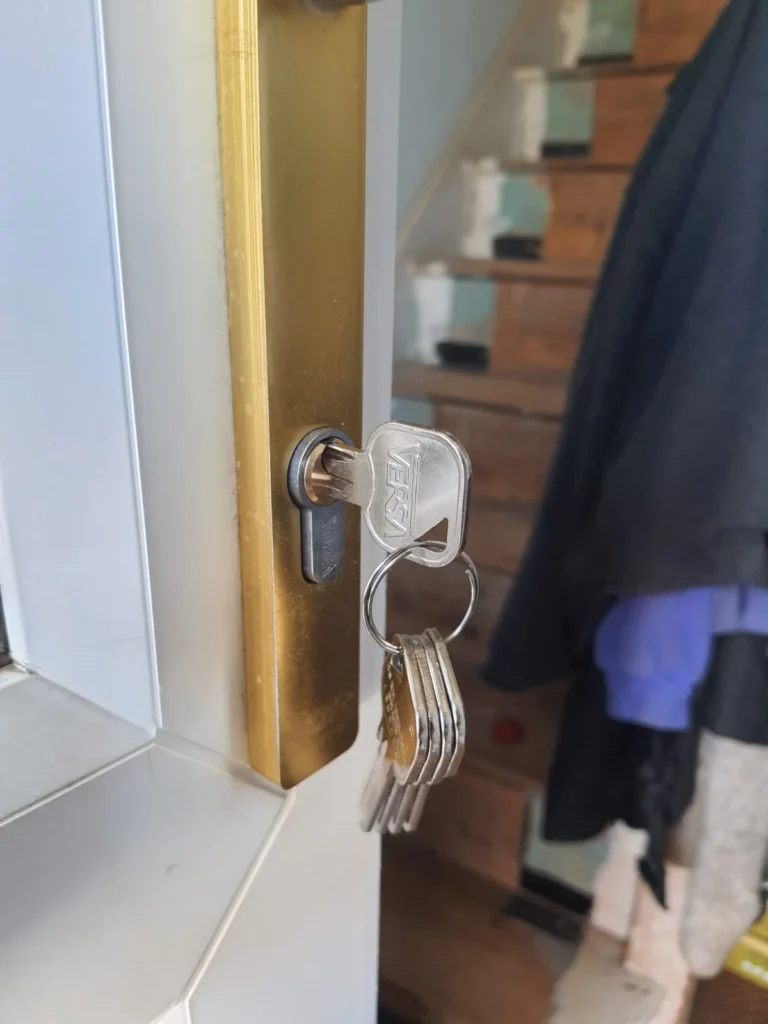
uPVC or composite doors. Almost always a euro cylinder with a multipoint strip. Extraction is usually fine, but if the door was stiff beforehand, the alignment needs looking at too. Our guide on what to check when a uPVC door will not lock covers the adjustment side.
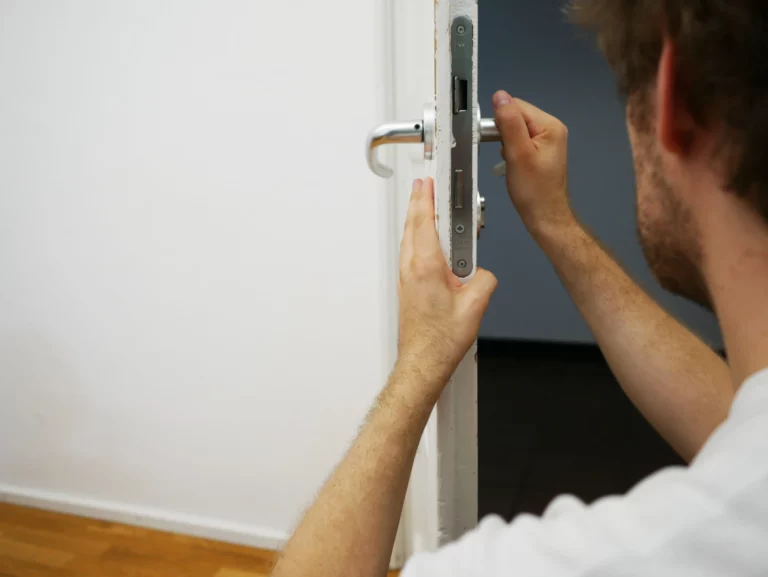
Mortice locks on wooden doors. Common in Colchester’s older terraces. These are often straightforward to extract from, though a very old lock with a worn lever pack may be due for replacement anyway, and that is a good moment to check whether it is BS3621 rated for your insurance.
Padlocks, gates, sheds and garages. Frequently neglected and frequently seized. Often the most economical answer is a new padlock rather than extraction, and we will tell you that rather than charging you for the harder option.
Car keys. Worth saying plainly: we do not currently offer an auto locksmith service. For a key snapped in a vehicle lock or ignition, you need a specialist auto locksmith or your dealer.
Common questions
Can I still use the lock once the key is extracted? In most cases, yes. Extraction is non-destructive and the cylinder is usually undamaged. If the lock was already worn enough to break a key, replacement may be the sensible call, and we will give you a straight answer rather than defaulting to the more expensive one.
My key snapped and I have a spare. Can I just use that? Not in the same lock, not until the broken piece is out. Pushing the spare in will drive the fragment deeper. If you have a second door you can use, use that and deal with the affected lock properly.
How long does extraction take? Typically a short job once we are on site, often fifteen to thirty minutes depending on how the fragment is sitting and whether the cylinder has been rotated.
Is a snapped key covered by home insurance? Generally not under a standard policy, as it is wear and tear rather than damage or theft. Some home emergency add-ons include lock and key cover, so it is worth checking whether you have one before assuming you are not covered.
The key snapped in the lock but the door is wide open. Is it urgent? Not usually. If the door still secures and you have another working entrance, it can wait for a convenient appointment rather than an emergency callout, which will also cost you less.
Snapped key in Colchester or Clacton? We can help
We extract snapped keys across Colchester, Clacton-on-Sea and the wider Tendring and North Essex area, and we carry replacement cylinders and locks on the van so there is no second visit if the lock does turn out to be beyond saving.
There is no call-out fee, you get a clear price before work starts, and we will tell you honestly whether you need a new lock or just a new key.
Call Parade Locks on 01206 654788 (Colchester), 01255 744788 (Clacton) or 07889 977737, or get in touch through the site.
We also offer a discount for NHS staff through our association with Unite the Union, and a pensioner discount.
One Comment