What Locks Does My Home Insurance Actually Require? BS3621 and TS007 Explained
What Locks Does My Home Insurance Actually Require?
Most people find out what their home insurance says about locks at the worst possible moment. Not when they take the policy out, but after a break-in, when a claims handler starts asking what was fitted to the front door.
It is a fair question, and it has a fairly simple answer once you know what to look for. This guide explains the two standards that matter for nearly every home in Colchester, Clacton-on-Sea and the surrounding Essex villages, how to check your own doors in about a minute, and what actually happens if your locks fall short.
We fit these locks every week across Tendring and North Essex, so this is written from what we see on doorsteps rather than from a brochure.
The short version
For almost every UK home, only two lock standards genuinely matter:
- BS3621 for wooden doors fitted with a mortice deadlock or a keyed rim lock.
- TS007 3-star for uPVC, composite and aluminium doors that use a euro cylinder and a multipoint locking strip.
If your final exit doors meet whichever standard applies to them, you have satisfied the security clause in the vast majority of standard home policies. Many policies also ask for key-operated locks on accessible windows.
That is the whole thing. The rest of this article is about how to check, and where people get caught out.
BS3621: the standard for wooden doors
BS3621 is the British Standard for thief-resistant, key-operated locks. It is the one most insurers name directly in their policy wording, usually phrased as something like “a five lever mortice deadlock conforming to BS3621”.
To carry the standard, a lock has to pass independent attack testing at BSI. It has to resist drilling, picking, sawing and forcing, and it has to meet build requirements including a hardened bolt with a minimum throw and anti-drill protection.
The trap: a lock can have five levers and still not be BS3621. This is the single most common misunderstanding we come across in Colchester’s older terraced stock. Plenty of the New Town, Old Heath and Lexden properties we attend have a five lever lock fitted at some point in the last thirty years that was never certified. Lever count alone proves nothing. Certification is what your insurer is relying on.
The 60-second check
Open the door and look at the narrow metal faceplate set into the edge of the door, the plate the bolt comes through.
- A compliant lock has the BSI Kitemark, the heart-shaped logo, stamped or laser-etched into the metal, alongside the marking BS3621 and usually a year.
- If the faceplate is bare, or carries only a manufacturer’s name, it is almost certainly not compliant.
- “BS3621” printed on the box but absent from the lock itself does not count.
Two related standards worth knowing
You will occasionally see two siblings mentioned, and they exist for good reasons:
- BS8621 offers the same resistance to forced entry but allows keyless exit from the inside, normally via a thumbturn. This is the correct standard for flats, HMOs and anywhere a locked door sits on a fire escape route, because escape should never depend on finding a key. If you live in a flat, this is usually what your building actually needs.
- BS10621 allows keyless exit in normal use but can be deadlocked from outside when the property is empty. It is uncommon, and it should only be used where there is a second means of escape.
If you have been told to fit BS3621 to a flat’s front door, ask the question again. Fire safety and insurance wording can pull in opposite directions, and a good locksmith should raise it rather than just fit what was asked for.
TS007: the standard for uPVC and composite doors
A modern uPVC or composite door cannot take a mortice deadlock. It uses a multipoint mechanism driven by a euro cylinder, and the security weak point has historically been the cylinder itself rather than the mechanism.
That weak point is lock snapping, where the cylinder is gripped and snapped in half to expose the cam. It became the dominant entry method on uPVC doors through the 2010s, and it takes seconds on an unrated cylinder.
TS007 is the British Standard developed specifically to resist it. It is rated in stars:
- 1 star: limited snap resistance. Only acceptable when paired with 2-star door furniture.
- 2 star: applies to the handles and escutcheons rather than the cylinder.
- 3 star: the cylinder alone passes the full test set, covering snapping, picking, drilling and bumping.
There are two legitimate routes to full protection. Either a 3-star cylinder on its own, or a 1-star cylinder combined with 2-star handles. Both are valid. In practice the 3-star cylinder is usually the cheaper and simpler route, because most existing handles are not Kitemarked to 2 star and would need replacing too.
You will also see Sold Secure Diamond (SS312), an independent rating endorsed by the Master Locksmiths Association. A cylinder carrying both TS007 3-star and Sold Secure Diamond is the strongest specification commonly available, and Diamond-rated cylinders are typically Secured by Design approved, meaning police recommended.
Where to look
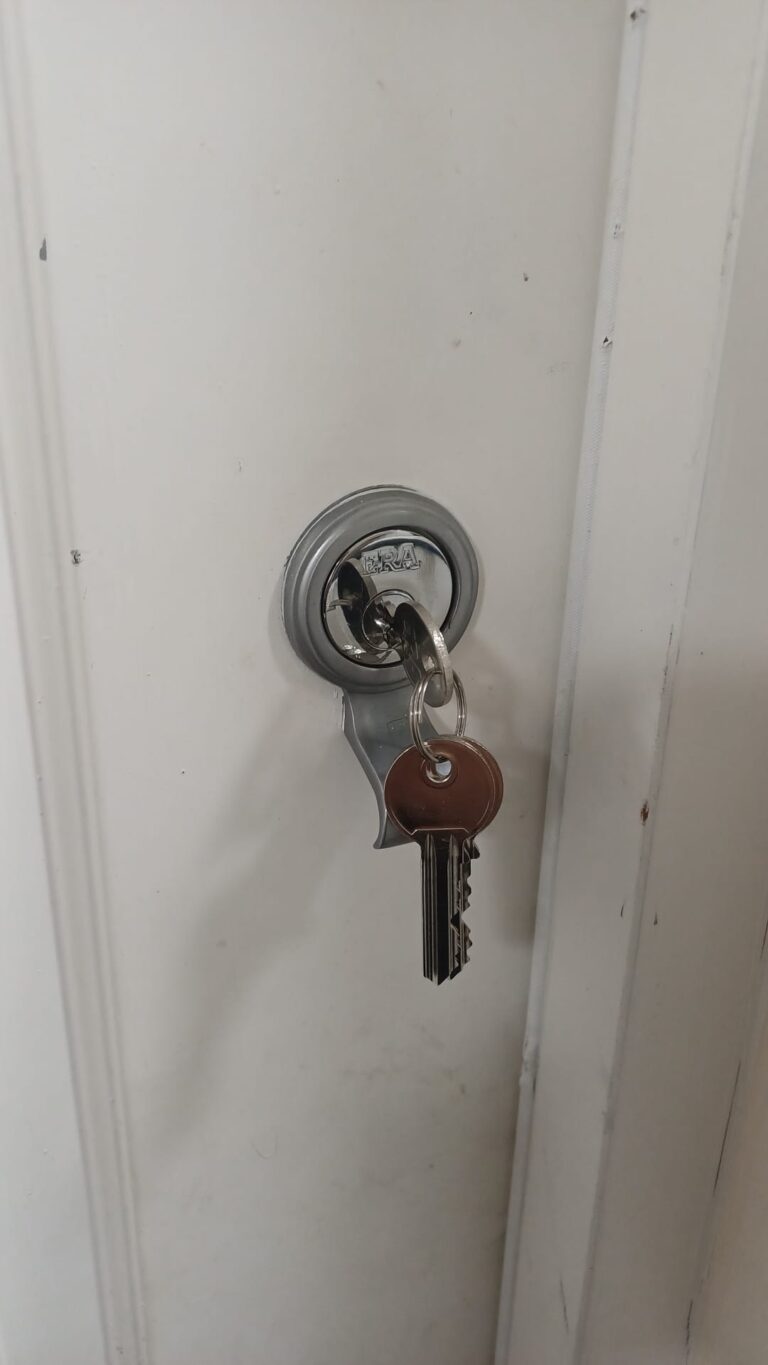
The stars are stamped on the face of the cylinder, around the keyway, on the outside of the door. You can usually read them without taking anything apart.
One detail that gets missed
A 3-star cylinder only performs if it is sized correctly. If the cylinder protrudes beyond the handle, it can be gripped, and the rating is largely academic. Cylinders come in a wide range of sizes and the correct one has to be measured on site. If a locksmith quotes you a price for an anti-snap cylinder without measuring, that is a reasonable thing to query.
This matters a lot around Clacton, Holland-on-Sea and the Tendring villages, where there is a large stock of bungalows fitted with 1990s and early 2000s uPVC. Those doors are usually still on their original cylinders, which predate the TS007 standard entirely.
The 2024 update to TS007
Worth knowing if you are upgrading now. The TS007 standard was revised in 2024, and the updated TS007-1:2024 testing added protocols for newer attack methods including freeze and glue attacks.
There is no need to rush out and replace a cylinder you fitted recently. Manufacturers have confirmed that existing 3-star stock remains fully compliant, with a transition period running to the end of 2026. But if you are buying a cylinder today, asking for one certified to TS007-1:2024 costs very little extra and future-proofs the door.
Windows, and the bit people forget
Most standard policies also ask for key-operated locks on accessible windows, which usually means ground floor windows and any upper window reachable from a flat roof, a garage roof, an extension or a boundary wall.
Two things worth checking:
- That the locks are there and functional. Painted-over or seized window locks are extremely common in period properties.
- That you actually know where the keys are. A window lock that is never used is not doing anything for you.
What happens if your locks do not meet the policy
This is where a lot of locksmith advice online becomes unhelpfully dramatic. You will see claims that non-compliant locks automatically void your policy. That overstates it, and we would rather give you the accurate picture.
Here is the more realistic position.
The policy schedule is the binding document, not the summary. Wording varies significantly between insurers. Some name BS3621 explicitly. Some say “approved locks” without defining them. Some say “five lever mortice deadlock”, which implies the standard without strictly requiring certification. Read the schedule.
Insurers can reduce or refuse a claim where the security condition was not met, and lock compliance is one of the more common causes of disputed burglary claims. That risk is real.
But the law is not as blunt as “void”. Under the Insurance Act 2015, breach of a warranty suspends cover while the breach continues rather than terminating the policy outright, and an insurer generally cannot rely on a breach of a risk mitigation term if the policyholder can show the breach could not have increased the risk of the loss that actually happened.
And you have a route of appeal. If a claim is declined and you think it has been handled unfairly, the Financial Ombudsman Service can review it free of charge. When looking at declined claims involving security conditions, the Ombudsman considers things like whether the condition was made clear in the policy documents, what was asked when the policy was sold, and whether the condition not being met actually made a difference.
None of which is a reason to leave a substandard cylinder on your front door. The point is simply that the honest answer is “it depends on the wording and the circumstances”, not “your insurance is worthless”. The £30 gap between a generic cylinder and a certified 3-star one is still the cheapest security decision you will ever make, and it removes the argument entirely.
Two things to keep after an upgrade
If you do upgrade, hold on to:
- The itemised invoice, showing the make, model and standard of what was fitted.
- The cylinder or lock packaging, which carries the certification markings.
Between them, they are your evidence if you ever need to demonstrate what was on the door. We provide a written invoice on every job for exactly this reason.
Common questions
Does a Yale-style nightlatch satisfy my insurance? On its own, usually not. Most policies treat a standard nightlatch as convenience hardware and expect a British Standard deadlock alongside it. Some Kitemarked nightlatches do conform to BS3621, so check the faceplate rather than assuming.
I have a BS3621 lock but I only slammed the door. Am I covered? Possibly not. Many policies require the door to be deadlocked, not just latched. If the deadbolt was not thrown, an insurer may treat the door as not properly secured. It is a common cause of refused claims and it costs nothing to avoid.
Do smart locks count? Only if certified. Insurers look for recognised marks such as a BSI Kitemark or Sold Secure approval. A smart lock with no certification is likely to be treated as non-compliant, and it is worth confirming in writing with your insurer before fitting one.
Will better locks reduce my premium? Sometimes, though rarely by a dramatic amount. Insurers price on risk, so a property secured to the standard they want may be cheaper to cover. The bigger benefit is that it removes any argument at claim stage.
Getting your doors checked in Colchester and Clacton
If you are not sure what is fitted to your doors, we are happy to look. We cover Colchester, Clacton-on-Sea and the wider Tendring and North Essex area, and we carry BS3621 mortice locks and TS007 3-star cylinders on the van, so in most cases we can check and upgrade in the same visit.
There is no call-out fee, we measure cylinders on site rather than guessing, and you get a clear price before any work starts along with a written invoice for your insurer.
Call Parade Locks on 01206 654788 (Colchester), 01255 744788 (Clacton) or 07889 977737, or get in touch through the site.
We also offer a discount for NHS staff through our association with Unite the Union, and a pensioner discount.