Key Stuck in the Lock? Safe Ways to Free It and When to Stop
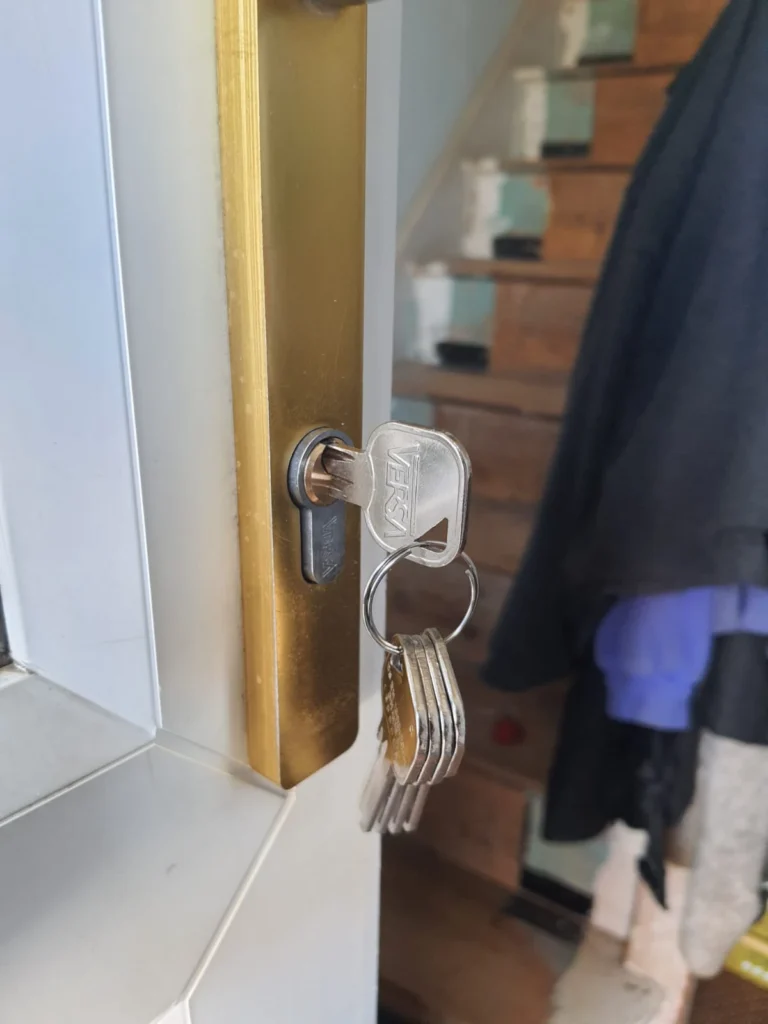
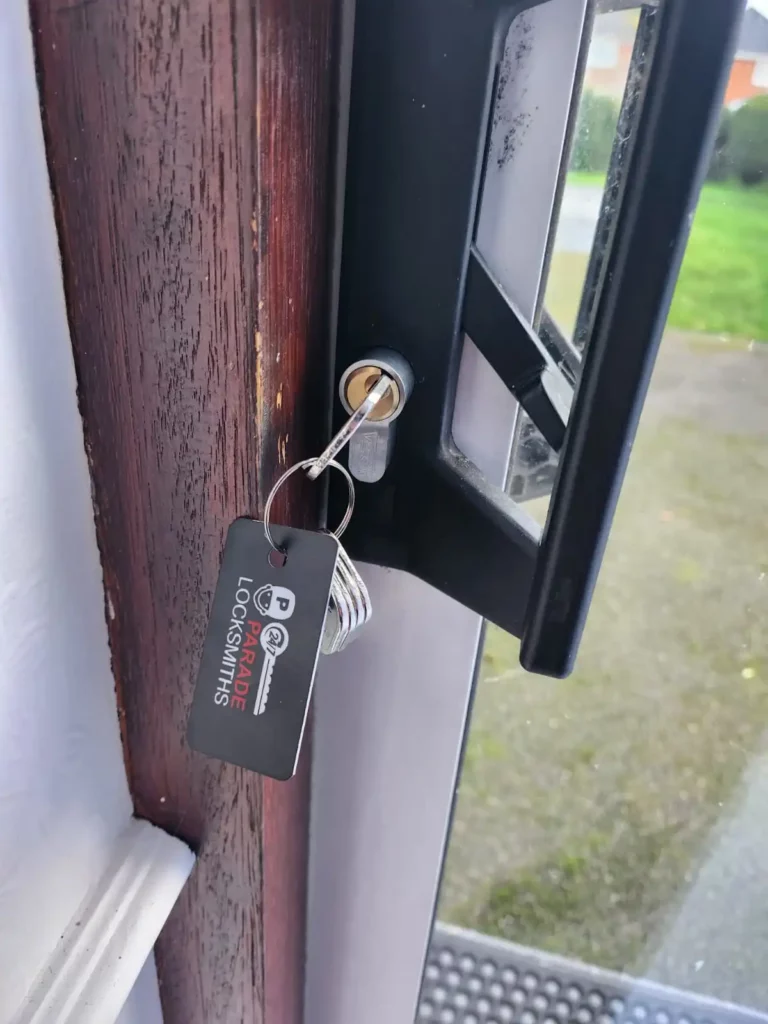
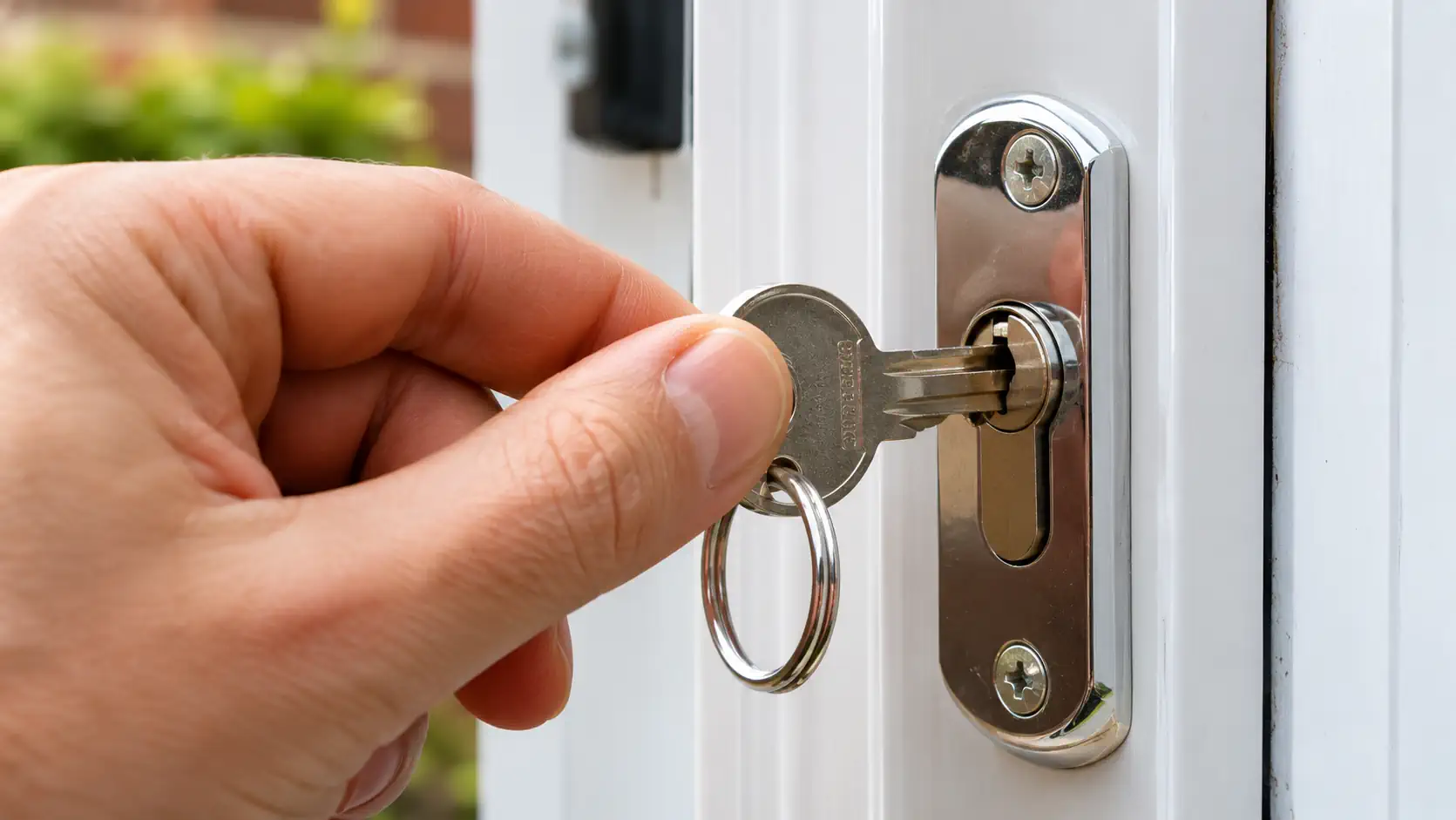
If your key is stuck in the lock, stop pulling. Turn it gently back to the position it went in, take the pressure off the door, and ease it out with small movements. If it still will not move after a few calm minutes, or it starts to bend, leave it in place and call a locksmith, because a bent key is one step away from a snapped one.
This guide gives the safe order to try things, explains what a stuck key is telling you about the lock, and shows where DIY should end.
Stuck or snapped? Check first
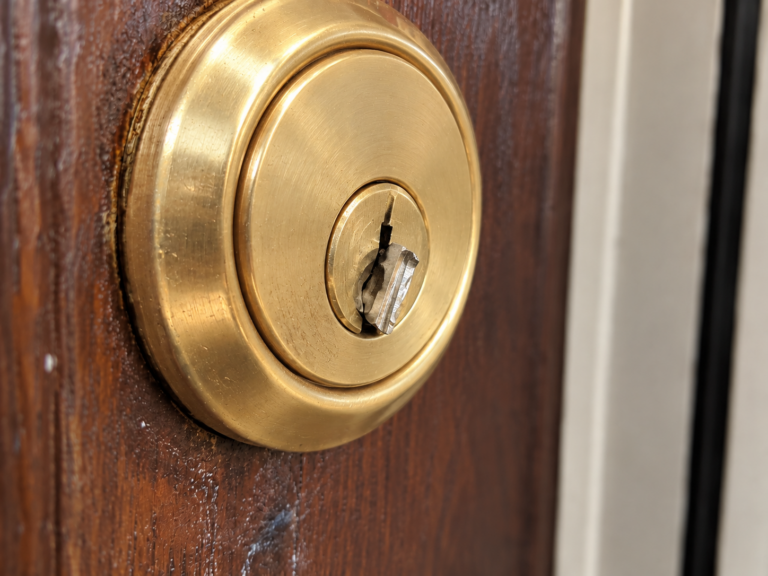
A stuck key is still in one piece: you can hold the bow and the whole blade is in the lock. If the key went light in your hand and only part of it came out, it has snapped. That needs a different approach, so follow our guide on what to do when a key snaps in the lock instead.
How to get a stuck key out of a lock: the safe sequence
Work through these steps in order. Each one is low risk, and each one tells you something about the fault.
- Check it is the right key. The Master Locksmiths Association lists using the wrong key by mistake as one of the main causes of a stuck key. Back door, garage and front door keys often look alike.
- Return the key to its removal position. A cylinder lock only releases the key at one set position. Slightly off that position, the key will hold. Turn it slowly back towards where it was when you put it in, feeling for the point where it sits freely.
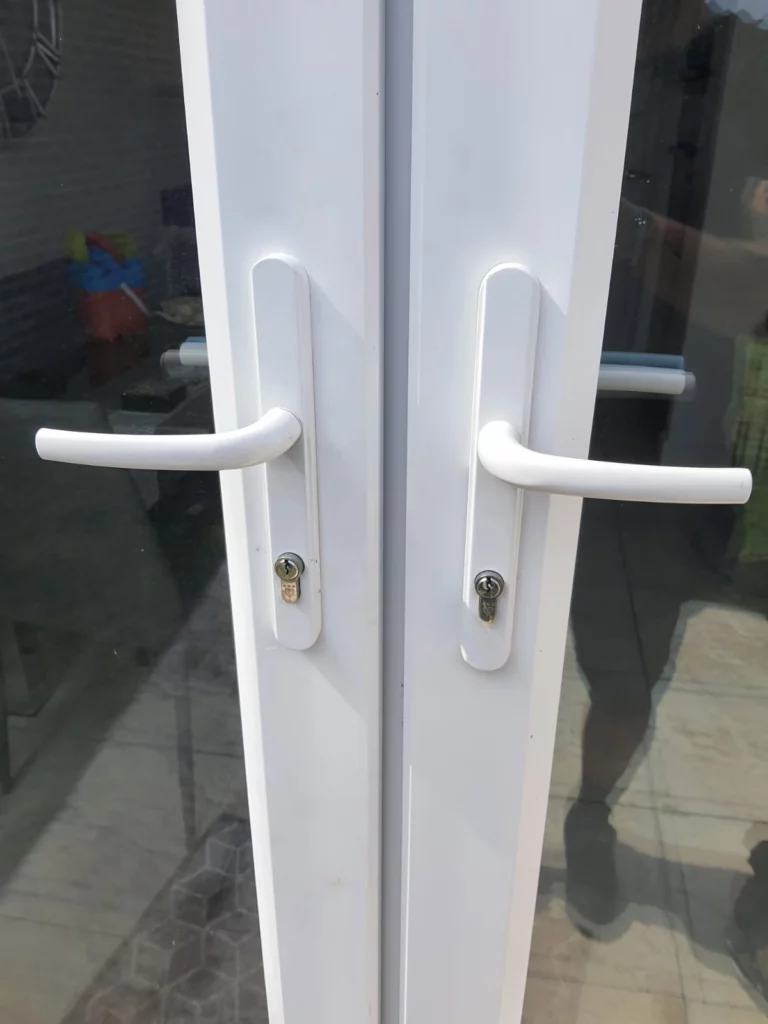
- Take the pressure off the door. On a uPVC or composite door, push the door firmly into its frame, or lift it slightly by the handle, while you turn the key. If the bolts are pressing on the keeps in the frame, the key is fighting them.
- Use small movements, not force. Keep the key straight and ease it in and out by a millimetre or so with light turning pressure. The MLA warns that forcing the key out could snap it in the lock.
- Lubricate with the right product. Yale’s cylinder care instructions recommend a Teflon (PTFE) based lubricant. If the key is stuck in place, give the keyway a short burst of PTFE or cylinder spray, wait a minute, then repeat step 4. Do not use oil. The same instructions say never oil the cylinder, and ABUS says products containing oil or graphite are not suitable because they can clog the parts and leave residue.
- Set a limit. If the key bends, twists, or nothing has changed after a few minutes, stop. Every extra effort from here raises the risk of a snapped key and a damaged cylinder.
Three things not to do: do not put a second key in from the other side of the door, do not grip the key with pliers and lever it, and do not take the lock apart. The MLA calls dismantling the lock yourself the worst thing you could do, and Yale’s instructions say never take the cylinder apart. Inserting keys from both sides at once can also make a euro cylinder’s cam slip, as explained below.
Key stuck in lock and won’t turn? What it is telling you
How the key is stuck points to the cause. The MLA notes that a key that will not turn at all is most likely the wrong key or a badly cut, worn or broken key, while a key that partly turned and then stuck points more to lock failure or incorrect operation. This table puts that together with the other common patterns.
| What you notice | Likely cause | What you can try | Call a locksmith if |
|---|---|---|---|
| Key goes in but will not turn at all | Wrong key, or a badly cut or worn key | Try the spare. If the spare turns smoothly, the original key is the problem | The spare will not turn either |
| Key turned part way, then jammed | Lock failure or incorrect operation | Stop turning. Ease the key back towards its starting point | It will not return, especially on a uPVC door |
| Key will not come out, with the door locked or not | Slipped cam in a euro cylinder | Nothing safe beyond steps 1 to 4 | Straight away. Forcing it can damage the cylinder |
| Stiff only with the door shut, smooth with it open | Door out of alignment or dropped on its hinges | Push or lift the door while turning, then run the open-door test | It keeps happening, as the hinges, keeps or gearbox may need adjusting |
| Stiff even with the door open | Worn cylinder or failing gearbox | Lubricate with PTFE or cylinder spray | Lubricant makes no difference |
| Stiffer in cold, damp weather | Moisture in the keyway | A cylinder spray that displaces moisture | The key still binds once the weather warms up |
Key stuck half turned in a uPVC door
This is the case to stop earliest. On uPVC and composite doors, the MLA says the most common cause is incorrect operation of the multipoint locking system, where the cylinder’s cam gets trapped behind the latch release mechanism and cannot be freed without expert intervention.
The other common fault is a slipped cam. The cam is the small lever in the middle of a euro cylinder that drives the lock. When it slips and rotates through 180 degrees, it sticks out of the cylinder body and stops the key coming out, whether the door is locked or not. Worn locks and worn keys make it more likely to happen again, and the MLA links slipped cams in uPVC doors to poorly cut keys.
If the door is open or not locked when the key sticks, leave it that way and avoid closing it hard. The MLA notes that a key stuck in a door that is not locked is easier to deal with than one in a locked door.
DIY or call out? Where the line sits
- Fine to try yourself: the right key, the removal position, taking pressure off the door, small movements and the right lubricant.
- Stop and call: the key is bending or twisting, it is stuck half turned in a uPVC door, the cam appears to be sticking out, you are locked out, or the door cannot be secured for the night.
- Never: dismantle the cylinder, use oil, use pliers to lever the key, or try a second key from the other side.
After it is free: stop it happening again
- Compare the key with the spare. If the spare works and the original does not, replace the key. If the trouble started after you had a copy cut, suspect the copy.
- Lubricate twice a year. ABUS recommends treating cylinders twice a year. Use a PTFE-based or cylinder-specific product, never oil.
- Run the open-door test. If the lock works smoothly with the door open but sticks when it is shut, the door needs adjusting, not the lock. Our uPVC door checks walk you through it.
- Treat repeat sticking as a warning. Worn locks and worn keys make faults such as a slipped cam more likely to come back, so a lock that keeps sticking is worth having checked before it fails.
Common questions
Will WD-40 get a stuck key out of a lock?
Check the label before you spray anything into a cylinder. Yale says never oil a cylinder, and ABUS says products containing oil or graphite are not suitable for cylinder maintenance. Use a PTFE-based lubricant or a spray sold for lock cylinders instead.
Is graphite safe for door locks?
Manufacturers disagree. ABUS advises against graphite in its cylinders, while Yale recommends PTFE-based lubricant. Follow your cylinder maker’s instructions. If you do not know who made it, PTFE is the safer default.
Will I need a new lock?
Not always. If the key was worn or badly cut, a new key may be all you need. If the cylinder has failed or its cam has slipped, a locksmith will tell you whether it can be freed and reused or should be replaced.
Key still stuck? Call Parade Locks
If the key will not budge, leave it where it is and call Parade Locks on 07889 977737, or get in touch online. Parade Locks takes emergency call-outs 24 hours a day and does not charge a call-out fee. We cover Clacton, Colchester and the surrounding Tendring and north Essex area, and can repair or replace the lock if it needs it. See our emergency locksmith call-outs page for more on what we do. Pensioners get 10% off.