Keyless Door Locks: Are They Secure, and Will Your Insurer Accept One?
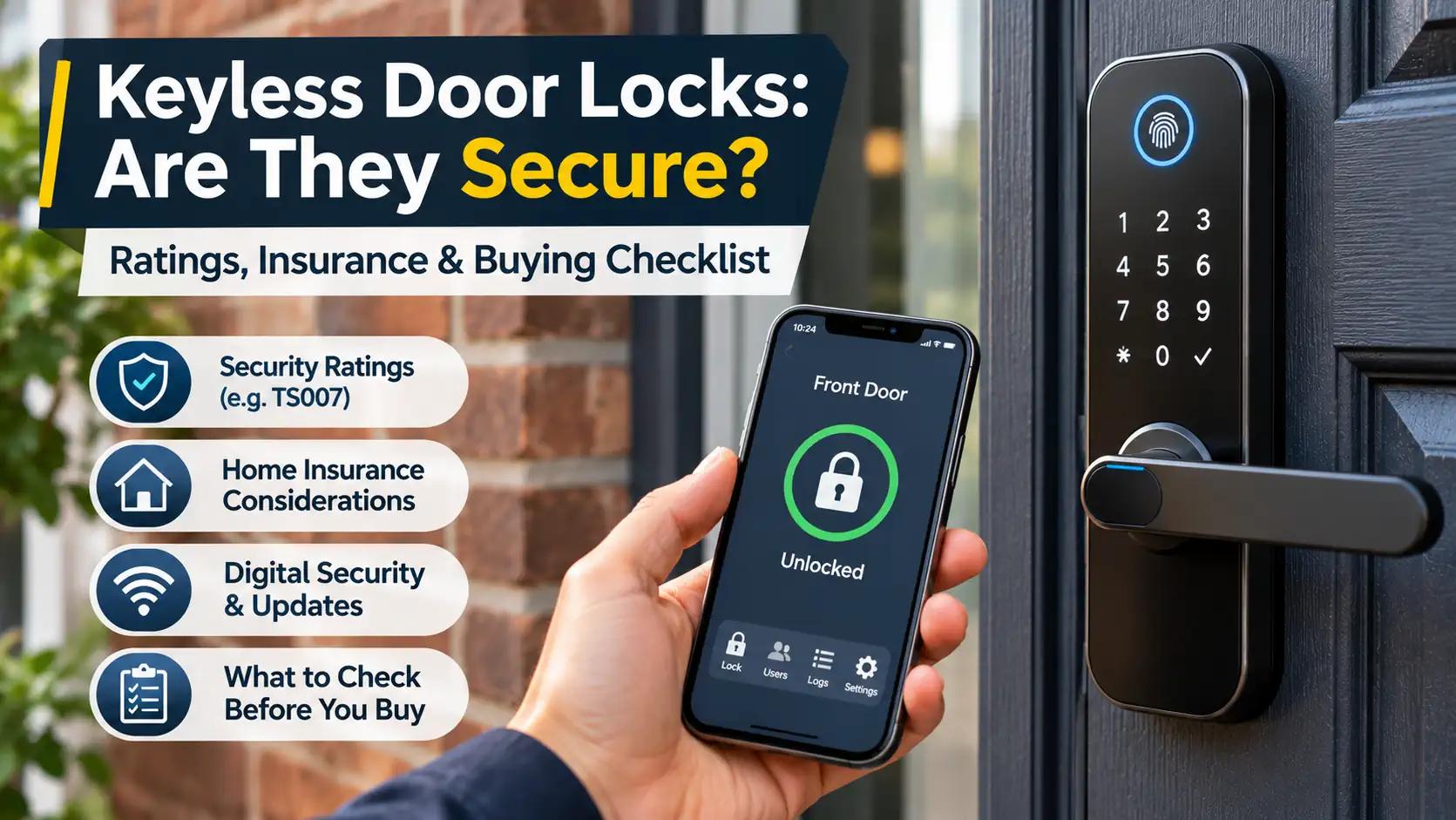
A keyless door lock is only as secure as the lock mechanism it drives, so judge it by its certification, not its app. Look for a recognised rating that the maker states for the exact model, and check your home insurance policy before you fit one. On many doors your insurer will still expect a conventional, rated lock to stay in place.
If you are weighing up a keyless lock as a Black Friday or Christmas buy, this guide explains the main types, what the ratings mean and what to check first.
What counts as a keyless door lock?
“Keyless” covers several different products. The key question is which part actually holds the door shut.
- Keypad or push-button locks. You enter a code to open the door. Some are purely mechanical, electronic versions often add fobs or an app.
- Smart cylinders. These replace the euro cylinder in a uPVC or composite door and are operated by an app, fob, code or fingerprint.
- Retrofit smart locks. A motorised unit fits on the inside of the door and turns your existing thumbturn or key. Your current cylinder still does the security work, so its rating matters as much as before.
- Smart handles and motorised multipoint locks. These replace the handle set or the multipoint mechanism on a uPVC or composite door, and throw the hooks and bolts electronically.
Are keyless door locks safe?
They can be, but judge two separate things. Physical security is how well the lock resists being snapped, drilled or forced. Digital security is how well the codes, app account and wireless link resist being guessed, copied or hacked. A lock can be strong on one and weak on the other.
Physical security
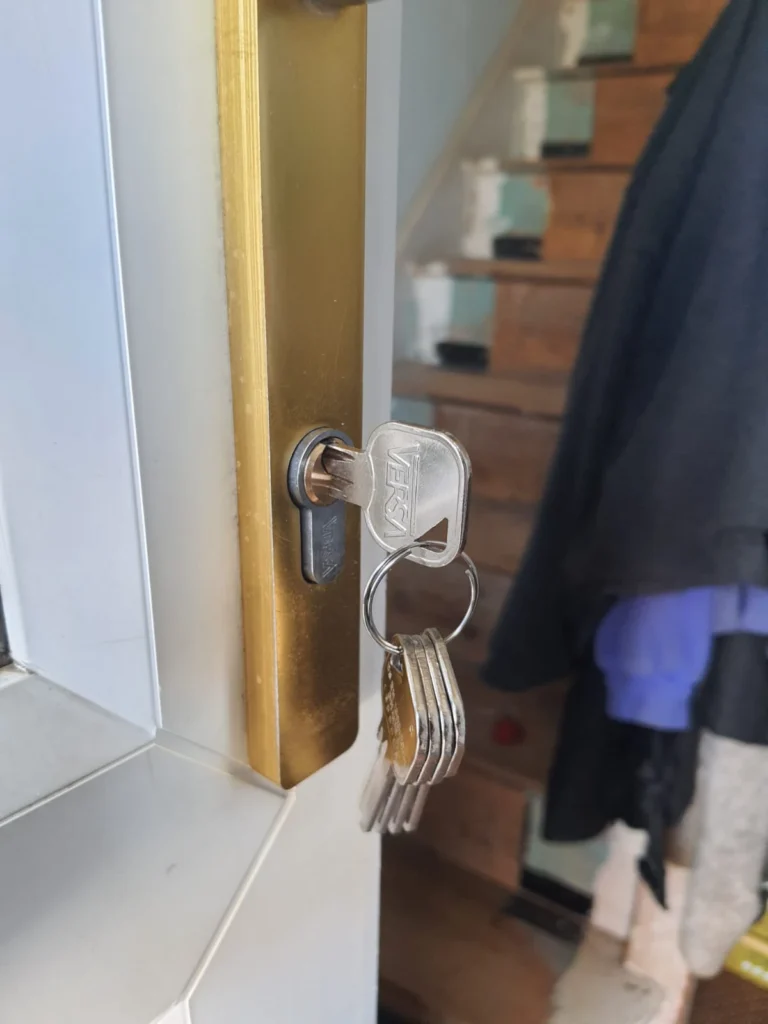
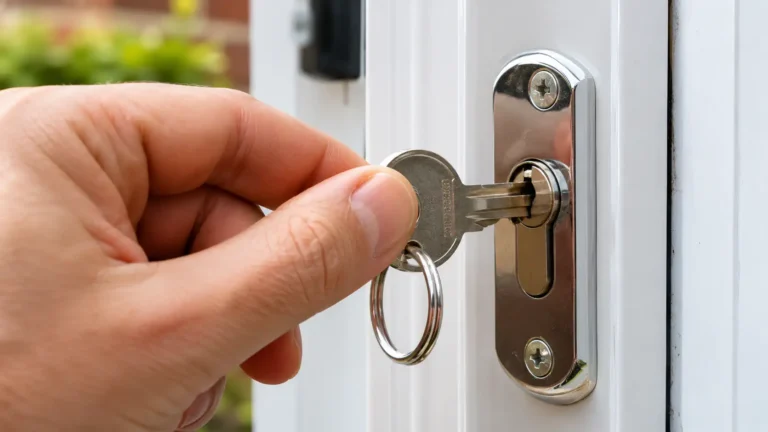
A smart cylinder sits in the same hole in the door as an ordinary euro cylinder, so it faces the same attacks. We explain snapping, protruding cylinders and the TS 007 star ratings in our guide to which locks your home insurance requires. In short, if the product contains or relies on a euro cylinder, that cylinder needs its own rating.
Digital security
Since 29 April 2024, UK law has set minimum security rules for consumer products that connect to the internet or a network. Under the consumer connectable product security regime, makers cannot ship products with shared default passwords or easily guessed ones, must publish a way to report security problems, and must publish how long they will provide security updates. The detail is in Schedule 1 of the 2023 regulations. Read that support period before you buy.
What do the security ratings mean?
These are the marks you are most likely to see. Check that the rating applies to the exact model, not only to the brand.
| Rating | What it covers | What to check |
|---|---|---|
| TS 007 Kitemark (stars) | Euro cylinders and security handles. Full protection is a 3-star cylinder, or a 1-star cylinder with a 2-star handle or lock surround (Door & Hardware Federation). | The DHF page does not mention electronic or smart features, so a TS 007 mark tells you about physical attack resistance only. |
| Sold Secure SS312 (Diamond or Gold) | A test specification for lock cylinders. Diamond is the highest grade and currently applies only to euro profile cylinders (Master Locksmiths Association). | Look for it on the smart cylinder itself, not on the brand’s other locks. |
| Sold Secure SS504 | A specification for smart locks in homes. It tests the electronics and credentials such as fobs to TS621, physical attack resistance to SS301 Bronze, any cylinder to BS EN 1303, and requires certification to the ETSI EN 303 645 cyber security baseline (Secured by Design, Sold Secure). | The physical test is SS301 Bronze, a different test from the cylinder ratings above. If a cylinder is involved, check its own TS 007 or SS312 rating too. |
| Secured by Design Secure Connected Device | A police-backed accreditation for connected products that have been independently certified against ETSI EN 303 645 (Secured by Design). | Accreditation is product by product. A brand’s alarm sensors being accredited says nothing about its lock. |
| BS 3621:2017 | A thief-resistant, mechanically operated, single-point lock that needs a key from both sides, typically a deadlock on a timber door. BS 8621 and BS 10621 cover the thumbturn and dual-mode versions (BSI). | A motorised smart lock does not fit that description, so do not assume it can replace a BS 3621 lock your policy asks for. |
Will my insurer accept a keyless lock?
It depends on your policy. Many home insurance policies set minimum security standards, and the AA warns that not meeting them could invalidate your cover and lead to a burglary claim being turned down.
Allianz says most insurers still require a traditional BS 3621 lock alongside a smart lock, and advises telling your insurer before you fit one. For uPVC and composite doors with a multipoint lock, it advises cylinders with the BSI Kitemark and TS 007 3-star rating.
In practice:
- Timber front door with a deadlock: keep the BS 3621 deadlock and use it when the house is empty. Treat a keyless lock as an addition, not a replacement, unless your insurer confirms otherwise in writing.
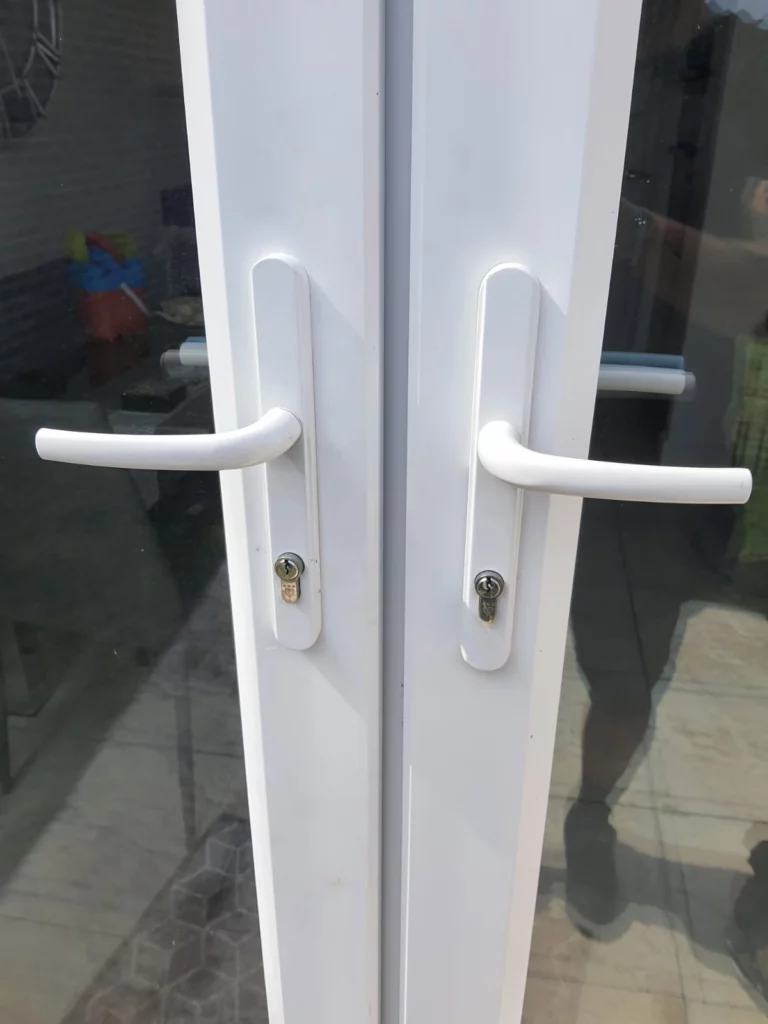
- uPVC or composite door: if you swap the cylinder for a smart cylinder, check the new one carries a TS 007 3-star or SS312 Diamond rating, or ask your insurer whether the rating it does carry is acceptable.
- Any door: find the “security conditions” or “minimum security” section of your policy, then ask your insurer about the specific model. Keep their reply.
Keyless door lock pros and cons
| Pros | Cons |
|---|---|
| No key to lose on a night out, if the model has no key at all or you rarely need the override. | The lock relies on batteries, so you have to keep on top of warnings and replacements. |
| Codes or fobs for family, carers or trades can usually be added and removed without changing the lock. | The app account becomes part of your door security. A weak password puts the door at risk. |
| Some products carry independent ratings for both physical and digital security. | Security updates stop at the end of the maker’s published support period. |
| A retrofit unit can be removed when you move, leaving the original lock in place. | It may not meet your policy’s lock requirements on its own. A motorised mechanism can also struggle on a uPVC door that has dropped, the same fault that stops a manual lock engaging. See our uPVC door won’t lock checklist. |
Checklist before you buy a keyless door lock
- Identify your door. Timber with a mortice or rim deadlock, or uPVC or composite with a multipoint lock and euro cylinder. This decides what fits and which ratings matter.
- Read your policy. Note exactly what the security conditions require for final exit doors, then ask your insurer in writing about the model you are considering.
- Find the rating for the exact model. Look for TS 007, SS312, SS504 or Secured by Design accreditation on the maker’s page, then check it against the Sold Secure or Secured by Design listings.
- Check the cylinder separately. If a euro cylinder is involved, it needs its own rating and must be sized so it does not stick out beyond the handle.
- Plan for flat batteries. Find out how the lock warns you and how you get in if the batteries die.
- Check the mechanical override. Know whether there is a key, where it goes, and where you will keep it.
- Check the support period. The maker must publish how long it will provide security updates. Compare that with how long you expect to keep the lock.
- Plan your way out. Everyone in the house should be able to open the door from inside quickly, without a phone or code.
Setting up a smart lock safely
The National Cyber Security Centre advice for smart devices applies to your front door too:
- Change any default password or code, and use a passphrase of several random words for the app account.
- Turn on automatic updates if the lock offers them, and install manual updates when prompted.
- Switch on 2-step verification for the app if it is available.
- Turn off remote access if you do not need to use the lock away from home.
- Factory reset the lock before you sell or give it away, or when you move house.
Frequently asked questions
Can I fit a keyless lock to a uPVC door?
Often, yes. Smart cylinders and smart handle sets are made for multipoint doors, but you need to check compatibility with your door and gearbox first, as the AA advises. The cylinder rating still matters.
Do I have to tell my insurer I have fitted a smart lock?
Allianz advises telling your insurer before fitting one. The AA also advises keeping your insurer up to date about changes.
Get your doors checked before you buy
If you are in Clacton, Colchester or the surrounding Tendring and north Essex area and want to know what your doors have now, book a lock and security check. If the check shows your cylinder or deadlock falls short of your policy, Parade Locks provides anti-snap cylinder upgrades and BS3621 lock fitting through our domestic locksmith service. Parade Locks does not charge a call-out fee, and pensioners get 10% off. Call 07889 977737 or send us a message.